
Blog

Fort Myers Occupational Therapy Pre-Writing Development
FOCUS offers Fort Myers occupational therapy, as well as pediatric speech therapy, ABA therapy, feeding and swallowing therapy and ADOS testing. Call (239) 313.5049 or Contact Us online.

2025 Speech Therapy Facts
FOCUS offers Fort Myers speech therapy, as well as pediatric ABA therapy, occupational therapy, and ADOS testing. Call (239) 313.5049 or Contact Us online.

May is Pediatric Feeding Disorder Awareness Month
FOCUS offers Fort Myers speech therapy, feeding and swallowing therapy, ABA therapy, occupational therapy, and ADOS testing. Call (239) 313.5049 or Contact Us online.

Why Our Fort Myers Speech Therapists Discourage Use of Pacifiers & Sippy Cups
FOCUS offers Fort Myers speech therapy, as well as pediatric ABA therapy, occupational therapy, and ADOS testing. Call (239) 313.5049 or Contact Us online.

Collaborative Approaches: How Fort Myers ABA Works With Other Therapies
At FOCUS Therapy in Fort Myers, we believe that the most effective approach to pediatric therapy isn’t found in isolated treatment, but through thoughtful collaboration between disciplines. Our multidisciplinary model combines Fort Myers ABA (Applied Behavior Analysis), Speech-Language Therapy, and Occupational Therapy to provide comprehensive care tailored to each child’s unique needs.
The Power of Integrated Therapy Approaches
Children with developmental delays, autism spectrum disorders, or other neurological differences often face challenges across multiple domains of functioning. While our Fort Myers ABA therapy provides powerful behavioral frameworks, speech therapy addresses communication skills, and occupational therapy targets sensory processing and daily living skills. When these approaches work in harmony, they create a synergistic effect that can dramatically improve outcomes.
Recent research continues to support what we’ve observed firsthand at FOCUS: collaborative therapy models yield better results than siloed approaches. A 2021 study published in the Journal of Autism and Developmental Disorders found that children receiving coordinated ABA and speech therapy services demonstrated significantly greater improvements in social communication than those receiving either therapy in isolation.
How Our Fort Myers ABA Therapy Complements Other Therapies
ABA + Speech Therapy
Applied Behavior Analysis provides systematic methods for teaching new skills and reducing challenging behaviors. When combined with speech therapy, these approaches can:
- Reinforce communication goals using consistent behavioral strategies.
- Improve generalization of newly acquired language skills across different settings.
- Address pragmatic language by teaching social rules and conversational skills using structured ABA techniques.
At FOCUS Therapy, our speech-language pathologists and behavior analysts coordinate their efforts by:
- Sharing vocabulary targets to ensure consistency across sessions.
- Aligning reinforcement strategies for communication attempts.
- Co-treating complex cases when beneficial, with both therapists working simultaneously.
ABA + Occupational Therapy
Occupational therapists at FOCUS address sensory processing, fine motor skills, and activities of daily living. When integrated with ABA, this powerful combination can:
- Manage sensory needs using behavior analysis to identify triggers and implement accommodations.
- Improve tolerance for challenging sensory experiences through systematic desensitization.
- Enhance motor planning by breaking complex tasks into manageable steps.
A 2022 study in Research in Developmental Disabilities demonstrated that children with autism who received coordinated occupational therapy and ABA services showed greater improvements in self-care skills and reduced behavioral challenges compared to those receiving non-integrated services.
Our Collaborative Model at FOCUS Therapy
At FOCUS Therapy, our integrated approach isn’t just a philosophy—it’s built into our daily operations. It includes:
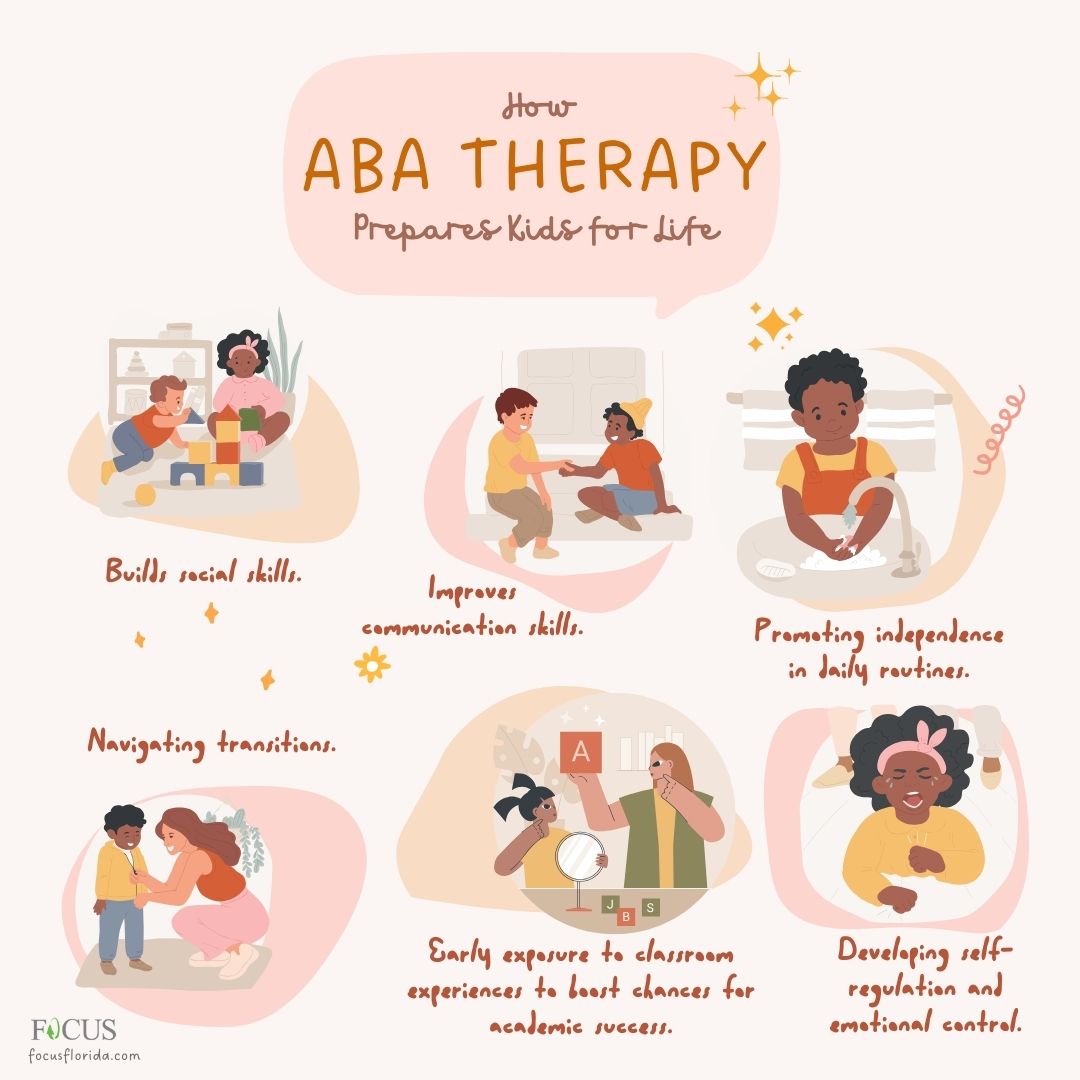
How Fort Myers ABA Therapy Prepares Kids for Life
FOCUS offers Fort Myers ABA therapy, as well as pediatric speech therapy, occupational therapy, and ADOS testing. Call (239) 313.5049 or Contact Us online.

ABA for Self-Advocacy: Helping Children With Autism Express Their Needs
Self-advocacy—the ability to express one’s needs, preferences, and boundaries—is a foundational life skill that empowers children to navigate their world with greater independence and confidence. For children with autism spectrum disorder (ASD) and other developmental conditions, building self-advocacy skills can be particularly challenging — yet profoundly important for long-term quality of life. At FOCUS Therapy in Fort Myers, our Applied Behavior Analysis (ABA) therapists emphasize teaching these crucial communication skills through evidence-based, compassionate approaches tailored to each child’s unique needs.
Understanding the Importance of Self-Advocacy
Self-advocacy skills extend far beyond simple communication. They form the foundation for personal autonomy, social connection, and emotional well-being. Research consistently shows that children who develop strong self-advocacy abilities experience:
- Reduced frustration and challenging behaviors: A 2021 study in the Journal of Autism and Developmental Disorders found that improvements in functional communication reduced challenging behaviors by up to 80% in children with ASD.
- Greater independence: Children who can effectively communicate their needs require less prompting and assistance from caregivers, fostering independence in daily activities.
- Improved quality of life: The ability to express preferences and make choices has been directly linked to improved quality of life indicators, including greater life satisfaction and reduced anxiety.
- Better long-term outcomes: Research shows that early development of self-advocacy skills predicts improved academic achievement, social relationships, and employment outcomes later in life.
For children with communication challenges, learning to advocate for themselves is not just beneficial—it’s transformative. When children cannot effectively communicate their needs, they often resort to challenging behaviors as a form of communication. This can create cycles of frustration for both the child and their caregivers.
Self-advocacy is also important for children with autism from a health and safety standpoint. When children can effectively communicate pain, discomfort, or dangerous situations, they receive timely medical attention and avoid potential hazards. Children who can express when they feel ill, identify where they are experiencing pain, or alert others to unsafe conditions protect themselves in critical situations. Furthermore, the ability to communicate allergies, medication needs, or sensory overwhelm helps prevent adverse health events. Research shows that children with strong self-advocacy skills experience fewer unaddressed medical issues and navigate potentially dangerous scenarios more successfully. By teaching your child to recognize and communicate health concerns, ABA therapy builds crucial safety skills that protect their wellbeing throughout their lives.
How ABA Therapy Builds Self-Advocacy Skills
At FOCUS Therapy, our Fort Myers ABA Therapy specialists utilize evidence-based strategies to systematically build self-advocacy skills appropriate to each child’s developmental level:
For Non-Verbal Communication:
- Picture Exchange Communication Systems (PECS). We teach children to exchange picture cards to communicate needs, beginning with basic wants and gradually expanding to more complex requests and expressions.
- Gesture and Sign Language Instruction. Simple gestures and signs offer children immediate tools to express common needs like “more,” “help,” “all done,” or “break.”
- Assistive Technology Support. For some children, augmentative and alternative communication (AAC) devices provide accessible pathways to self-expression, with research showing significant communication gains for non-verbal children.
For Emerging Verbal Skills:
- Scripting and Social Stories. Therapists use preplanned scripts to help children practice common advocacy scenarios, such as asking for help or expressing discomfort.
- Video Modeling. Children watch and imitate examples of effective self-advocacy, with studies showing improved skill acquisition through visual learning.
- Prompt Hierarchies. We implement systematic prompting strategies, gradually reducing assistance as children master new advocacy skills.
For Verbal Skill Development:
- Functional Communication Training (FCT). This evidence-based approach replaces challenging behaviors with more effective communication, with research showing up to 90% reduction in problematic behaviors when children learn alternative ways to express their needs.
- Choice-Making Opportunities. Our therapists embed numerous opportunities throughout sessions for children to express preferences and make meaningful choices.
- Perspective-Taking Activities. As children develop more advanced skills, we incorporate activities that help them understand how to effectively communicate their needs while considering others’ perspectives.
Building Skills Step by Step
Self-advocacy development follows a progression that respects each child’s current abilities while gently expanding their communication repertoire:
- Assessment Phase. Our BCBAs conduct thorough assessments to identify existing communication skills, preferences, and potential barriers to self-advocacy.
- Foundation Building. Initial therapy focuses on establishing consistent, reliable ways for children to express basic needs (hunger, thirst, rest, help).
- Expansion Phase. As foundations strengthen, therapy expands to include expressing emotions, preferences, and more complex needs.
- Generalization Focus. Skills practiced in the therapy setting are systematically transferred to home, school, and community environments.
- Self-Monitoring Development. Advanced goals include helping children recognize their own needs and initiate advocacy independently.
Research has shown that this kind of progressive approach to teaching self-advocacy leads to significant improvements in spontaneous communication and reductions in problem behaviors across multiple settings.

Parental Partnership: Supporting Self-Advocacy at Home
Parents play a crucial role in reinforcing and generalizing self-advocacy skills. Our FOCUS therapists partner with families to implement these evidence-based strategies at home:

Fort Myers ABA Therapy Tips for Teaching Your Child Personal Safety
FOCUS offers Fort Myers ABA therapy, as well as pediatric speech therapy, occupational therapy, and ADOS testing. Call (239) 313.5049 or Contact Us online.

Weighted Items: Fort Myers Occupational Therapist Explains When, How & Why They Might Help Your Child
For many children with sensory processing challenges, developmental delays, and/or autism spectrum disorder, the world can sometimes feel overwhelming. Sensory input that most people process unconsciously can feel intense, distracting, or even distressing. As a Fort Myers occupational therapist can tell you, deep pressure touch can have a calming, organizing effect on the nervous system. Weighted items, such as blankets, vests, clothing or accessories, are one practical way to provide this beneficial sensory input.
What Are Weighted Items?
Weighted items are therapeutic tools designed to provide deep pressure touch stimulation through added weight. These products come in many forms, including:
Weighted Blankets
- Blankets filled with plastic pellets, glass beads, or other materials to add weight
- Available in various sizes and weights (typically 5-25 pounds for different ages)
- Used during sleep, rest time, or for calming breaks throughout the day
- Some feature different textures or fabrics for additional sensory input
Weighted Vests and Compression Garments
- Vests with weight evenly distributed in pockets
- Usually weighing 5-10% of the child’s body weight
- Often worn during transitions, learning activities, or periods of dysregulation
- Compression garments provide similar deep pressure through tight-fitting fabric rather than weight
Weighted Lap Pads and Shoulder Wraps
- Smaller, more portable options for seated activities
- Can be used discreetly in classroom or therapy settings
- Often designed with child-friendly patterns or textures
- Shoulder wraps provide pressure across the shoulders and upper back
Weighted Stuffed Animals and Fidgets
- Plush toys with added weight to provide comfort and sensory input
- Weighted fidget toys that can be manipulated while providing proprioceptive feedback
- Often used during transitions, in therapeutic settings, or for self-regulation
Weighted Clothing and Accessories
- Items such as weighted hats, belts, or shoe inserts
- Can provide more subtle sensory input throughout daily activities
- May be less noticeable in social settings
How Weighted Items May Help Your Child
As your Fort Myers occupational therapist can explain, weighted items work on the principle of deep pressure touch stimulation, which research suggests can influence the nervous system in several beneficial ways:
Regulation of the Sensory System
Children with sensory processing challenges often have difficulty filtering and organizing sensory input. The consistent, deep pressure provided by weighted items may help:
- Decrease tactile defensiveness (oversensitivity to touch)
- Improve body awareness (proprioception)
- Support the integration of sensory information
Calming and Focusing Effects
Many families and therapists report that weighted items can help:
- Reduce anxiety and stress responses
- Decrease hyperactivity and fidgeting
- Support focus during structured activities
- Aid transitions between activities
- Promote more restful sleep
Supporting Motor Skills and Body Awareness
The added resistance provided by weighted items can:
- Enhance awareness of body position in space
- Provide feedback during movement activities
- Support core strength development
- Improve motor planning abilities
When and How to Use Weighted Items
The effectiveness of weighted items varies from child to child, and proper usage is key to safety and success. It’s a good idea to talk to your child’s Fort Myers occupational therapist before incorporating these tools, but here are some general points to keep in mind:
Appropriate Times for Use
- During transitions between activities
- When engaged in focused work or learning
- During times of stress or overstimulation
- As part of a sensory break
- During rest or sleep (in the case of weighted blankets)
Duration Guidelines
- Weighted vests are typically worn for 20-30 minutes at a time
- Allow a break of at least as long as the wearing time before reapplying
- Weighted blankets for sleep can be used throughout the night, but should be easily removable
- Lap pads and smaller items may be used for longer periods but should still provide breaks
Weight Recommendations
While individual needs vary, general guidelines include:
- Weighted blankets: Typically 10% of body weight plus 1-2 pounds for children
- Weighted vests: 5-10% of body weight, distributed evenly
- Lap pads: 2-5% of body weight
- Always follow the specific recommendations of your child’s occupational therapist
Important Safety Considerations
Weighted items, while beneficial for many children, require proper supervision and professional guidance from a Fort Myers occupational therapist. Know that:
- Weighted items should never restrict movement or breathing
- Children should be able to remove weighted items independently
- Young children (under 2-3 years) generally should not use weighted products
- Children with respiratory, cardiac, or certain neurological conditions may need to avoid weighted items
- Products should be regularly inspected for damage or leaking fillers
Signs That Weighted Items Are Helping
When weighted items are used appropriately, you might observe:
- Improved attention and focus
- Decreased fidgeting or stimming behaviors
- More organized movement patterns
- Better emotional regulation
- Smoother transitions between activities
- Improved sleep patterns
Signs That Weighted Items May Not Be Appropriate
Watch for these indicators that a weighted item may not be right for your child:
- Increased agitation or distress
- Attempts to remove the item
- Sweating or overheating
- Changes in skin color
- Complaints of discomfort
- Increased rather than decreased activity level
The Research Behind Weighted Items
The science behind weighted items continues to evolve. While many occupational therapists and families report positive outcomes, research results have been mixed:
- Some studies show improvements in attention, anxiety reduction, and sleep quality
- Other research has found limited measurable effects
- Individual responses vary significantly
- More research is needed to determine which children benefit most and under what conditions
Current best practice suggests that weighted items can be beneficial tools when used as part of a comprehensive sensory diet developed with professional guidance.

Talking to Your Fort Myers Occupational Therapist
Always consult with your child’s Fort Myers occupational therapist before introducing weighted items. They can help:
- Determine if weighted items are appropriate for your child’s specific needs.
- Select the right type, weight, and duration.
- Integrate weighted items into a comprehensive sensory diet.
- Monitor progress and make adjustments as needed.
- Identify any contraindications based on your child’s health history.
At our multidisciplinary clinic, our FOCUS occupational therapists work closely with speech therapists and behavior analysts to ensure that sensory strategies, including weighted items, support your child’s overall developmental goals.
Alternative and Complementary Approaches

Fort Myers Occupational Therapist Tips for Teaching Your Child Dress Themselves
FOCUS offers Fort Myers occupational therapy, as well as pediatric speech therapy, ABA therapy, and ADOS testing. Call (239) 313.5049 or Contact Us online.