
Blog
Pacifiers, Sippy Cups, and Speech: Why Fort Myers Speech Therapists Recommends Phasing Them Out Early
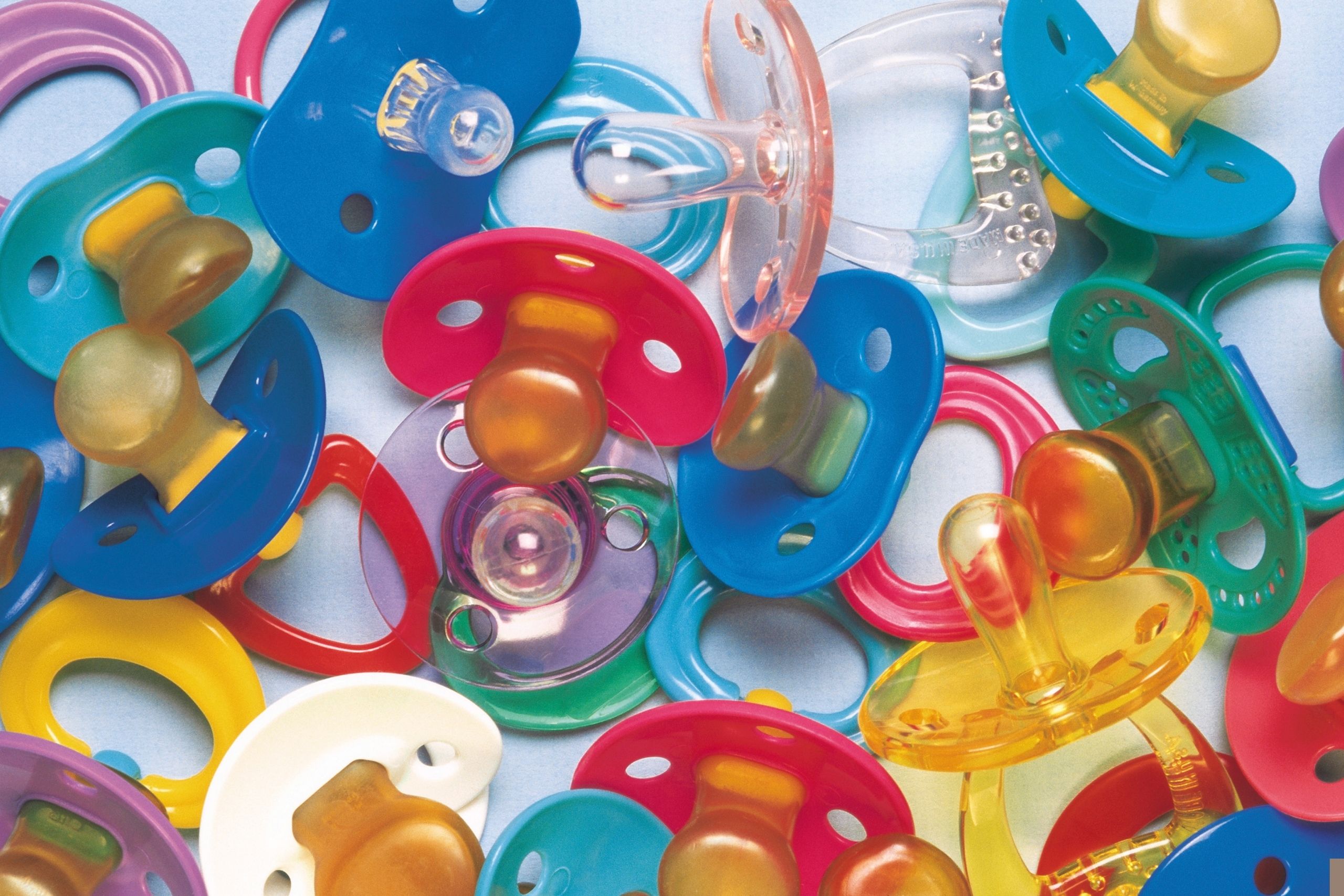
Most Fort Myers speech therapists are of the mind that once a child starts to talk, the pacifier and the sippy cup should be on their way out. A toddler needs a free mouth to babble, experiment with sounds, and try out new words. Heavy pacifier use is linked to smaller vocabularies, more ear infections, and dental changes that can make some sounds harder to produce. The sippy cup was designed as a short stop on the way to an open cup, not a permanent fixture. Neither one dooms a child’s speech. Both are worth retiring sooner rather than later.
Pacifiers Have a Place in Infancy
The case for phasing out pacifiers is about timing, not about whether pacifiers are good or bad. In the first months of life, they can serve real purposes. A 2025 review in American Family Physician found that pacifier use reduces the risk of sudden infant death syndrome, decreases discomfort during air travel, and helps control pain during shots and blood draws. The American Academy of Pediatrics recommends offering a pacifier when putting an infant to sleep, once breastfeeding is well established.
That window closes quickly. The AAP recommends weaning pacifier use during the second six months of life. The same review found that the health risks of pacifier use appear to increase after 12 months of age. Yet about half of children still use a pacifier at their first birthday, according to the review. For many families, the pacifier stays long after its benefits have run out.
What the Research Shows About Speech Sounds
The most careful study on pacifiers and speech sounds was published in 2021 in the International Journal of Language & Communication Disorders. Researchers Charlie Strutt, Ghada Khattab, and Joe Willoughby examined whether the duration and frequency of pacifier use affected how children’s speech developed.
Most speech outcomes in the study were not tied to pacifier use. The pattern that did emerge points straight at daytime habits. Frequent pacifier use during the day was associated with more atypical speech errors, the kind not usually seen in typical development. Nighttime use did not show the same effect. The authors noted that the evidence base is small and that the errors may resolve over time. Even so, the takeaway for parents is clear. A pacifier at bedtime is one thing. A pacifier in the mouth for hours of the day is a different matter.
Heavy Use and Smaller Vocabularies
A 2024 study took the question a step further. Researchers at the University of Oslo, Luis Muñoz, Natalia Kartushina, and Julien Mayor, published a study in Developmental Science examining pacifier use and vocabulary size.
They found that greater pacifier use over an infant’s life was associated with smaller vocabularies at 12 and 24 months. Later use mattered more than early use. Heavy pacifier use in the two months before a child’s second birthday was associated with a higher likelihood of scoring in the low range for vocabulary.
The study shows an association, not proof of cause, and the lead author said so directly. Fussier babies may use pacifiers more, and something about those babies could explain part of the difference. But the mechanism researchers propose is easy to understand. Babies learn to talk by babbling, playing with sounds, and imitating the people around them. A pacifier limits all three. Earlier experimental work found that infants holding a teething toy that restricted tongue movement temporarily had more difficulty telling certain speech sounds apart. A baby’s own mouth appears to help the brain process the sounds it hears.
A toddler with a pacifier in during most waking hours, at the age when vocabulary is exploding, is getting less practice than a toddler without one. That alone is a reason to cut back.
The Ear and Tooth Problems
The clearest risks of prolonged pacifier use affect speech indirectly, and they add to the case for weaning early.
The first is ear infections. The AAP’s recommendation to wean during the second six months of life is aimed at reducing the risk of otitis media, or middle ear infection. Repeated ear infections can leave fluid behind the eardrum and muffle hearing during the years when children are building their sound systems. FOCUS Therapy has written in more detail about how chronic ear infections can delay speech.
The second is teeth. Prolonged pacifier use is linked to dental malocclusion, including an open bite, where the front teeth do not meet. The American Academy of Pediatric Dentistry’s policy on pacifiers addresses these effects. An open bite changes where the tongue rests and moves, which can make sounds like /s/ and /z/ harder to produce cleanly. For more on how those sounds develop, see FOCUS’s sound-by-age timeline.
Sippy Cups: A Stepping Stone, Not a Fixture
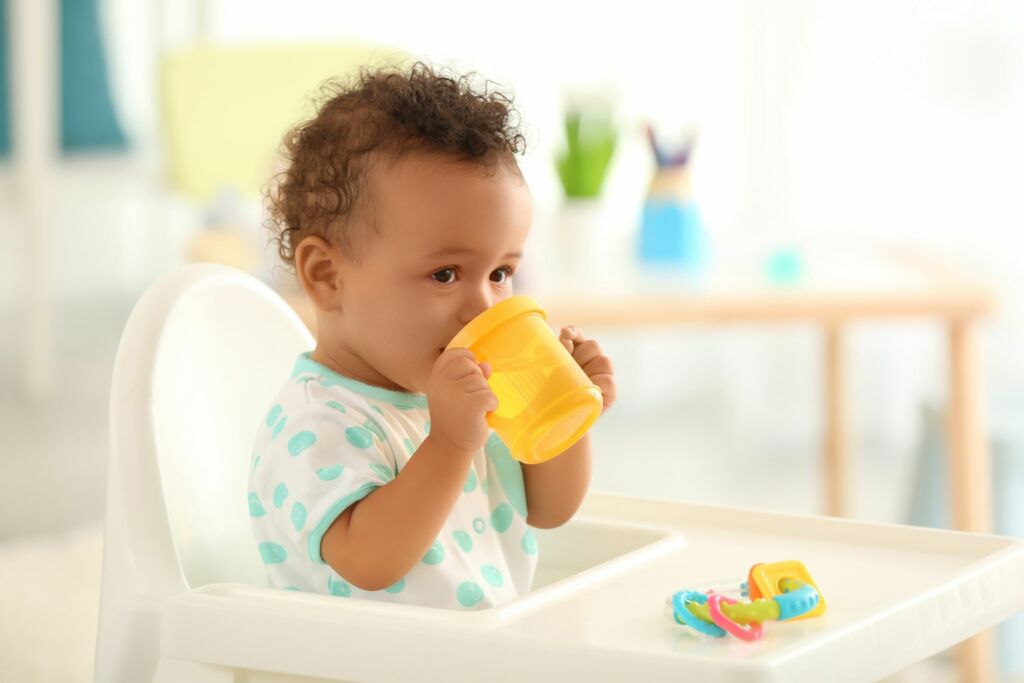
The research on sippy cups is thinner than the research on pacifiers. Few studies test whether sippy cups affect speech directly. The concern rests mostly on how the mouth works.
A hard-spouted sippy cup with a spill-proof valve requires a sucking motion similar to a bottle. Drinking from an open cup or a straw requires more mature movements of the lips and tongue. The Minnesota Department of Health’s WIC guidance on cup transitions notes that sucking on a bottle or hard-spouted sippy cup frequently throughout the day can restrict the tongue’s range of movement. The guidance recommends open cups and straw cups without spill-proof valves.
The AAP’s guidance on moving from bottle to cup describes the sippy cup as a short-term transition between the bottle and an open cup. There is also a strong dental reason to move on. A toddler who sips milk or juice from a spouted cup throughout the day bathes the teeth in sugar, and tooth decay is a well-documented result.
A sippy cup can be useful in the car or the stroller. At home, the open cup and the straw cup should take over.
How to Phase Them Out
Weaning works best when it is gradual and positive. The American Family Physician review recommends using positive reinforcement to wean children from pacifiers between 6 and 12 months of age.
Many families start by limiting the pacifier to sleep, then to bedtime only, then to nothing at all. Keeping the pacifier out of sight during the day removes the reminder. When a toddler tries to talk around a pacifier, a parent can invite the child to take it out first, which builds the habit of a free mouth for talking. Praise for each step works better than pressure.
For cups, parents can offer small amounts of water in an open cup at meals, hold the cup steady at first, and expect spills as part of learning. A straw cup without a valve is a good second option. Over a few weeks, the sippy cup can move from daily use to travel only, then out of the routine.
When to Talk With a Speech Therapist
Phasing out the pacifier and the sippy cup gives a child more room to practice. It is not a cure for a speech or language delay. When a toddler is behind in talking, the cause is often something else entirely: hearing problems, motor planning difficulties, language disorders, or developmental differences that have nothing to do with what a child sucks on. Parents who take away the pacifier and wait for words to arrive may lose months that early support could have used.
The warning signs are worth knowing. They include few words by 18 months, no two-word phrases by age two, speech that family members struggle to understand, and the loss of words a child once used. A child who shows those signs needs an evaluation, even after the pacifier is gone.
A Fort Myers speech therapist at FOCUS Therapy can assess a child’s speech, language, oral-motor skills, and feeding in one visit, and help families build a plan for weaning and for talking. Parents with questions can contact FOCUS Therapy to schedule an evaluation with a Fort Myers speech therapist.
FOCUS Therapy offers Speech Therapy in Fort Myers, Florida. Call (239) 313-5049 or Contact Us online.
Comments are closed.