
Blog
Hearing Loss, Chronic Ear Infections, and Delayed Speech
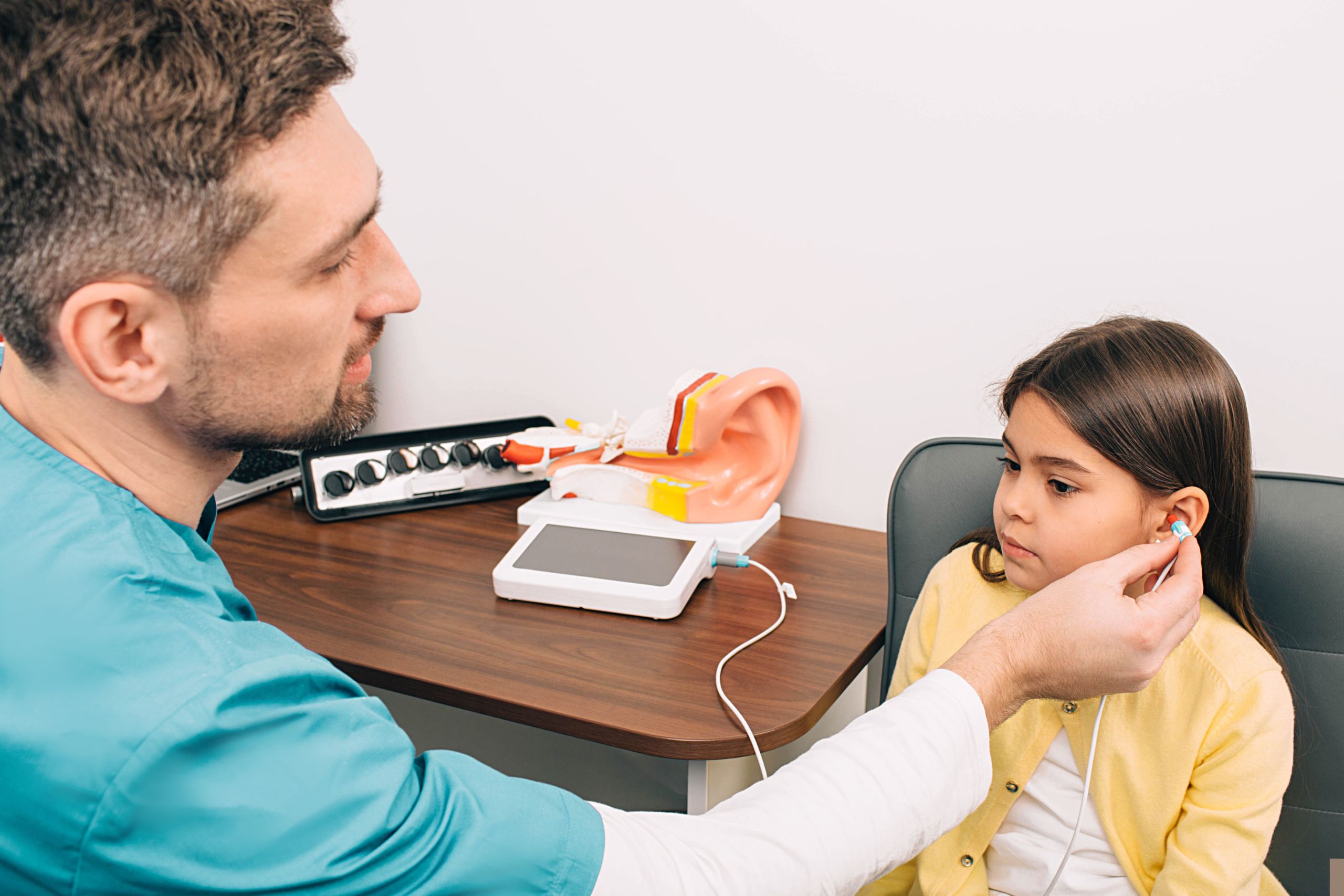
Ear infections are close to universal in early childhood. According to the National Institute on Deafness and Other Communication Disorders, five out of six children have at least one ear infection by their third birthday. Most of those children go on to maintain typical hearing function and develop speech normally. But sometimes, chronic ear infections can lead to a degree of hearing loss which requires the intervention of a Fort Myers speech therapist. Understanding which situations warrant attention requires understanding what fluid in the middle ear actually does to sound.
Sound Through Water
Fluid behind the eardrum does not usually produce deafness. It produces a mild conductive hearing loss, often in the range of 15 to 40 decibels, which functions something like listening with a finger in each ear. Speech remains audible. Detail does not.
The bigger issue is inconsistency. Fluid accumulates, clears, and returns. A child may hear clearly one week, poorly the next, and moderately well the week after. The brain is attempting to build a sound system out of input that keeps changing, during the exact window when it is doing the most learning.
Language development runs at peak intensity between roughly 12 months and four years. A child learning that words have consistent forms needs consistent evidence.
The Sounds That Disappear First
Mild hearing loss does not affect all speech equally. The elements that vanish are the quiet, high-frequency, and unstressed ones:
- /s/, /f/, /th/, /sh/, and /k/, which carry high frequency and low intensity
- Plural endings, as in cats and dogs
- Possessive markers, as in mom’s keys
- Third person verb endings, as in he runs
- Past tense endings, as in walked and jumped
- Unstressed function words such as a, the, and is
That list explains a pattern speech-language pathologists see constantly. A child with a history of chronic middle ear fluid frequently arrives with intelligible vowels, reasonable vocabulary, and missing word endings. The child is not being lazy with grammar. The child never received clear evidence that those endings existed.
What the Research Actually Shows
Here the story departs from the common version. Large randomized trials led by researchers at the University of Pittsburgh followed children with persistent middle ear effusion and compared prompt insertion of tympanostomy tubes against delayed insertion. Their findings, published in the New England Journal of Medicine, showed that in otherwise healthy young children, prompt tube placement did not improve developmental outcomes through ages 9 to 11.
That result deserves careful reading. It does not mean hearing is unimportant. It means that fluid alone, in an otherwise healthy child, does not reliably produce lasting language impairment, and that rushing to surgery is not automatically protective.
The practical takeaway is a shift in the question. The useful question is not how many ear infections a child has had. It is what the child is hearing now, and what the child’s speech looks like now.
Signs That Warrant Attention
Certain patterns justify a hearing evaluation regardless of infection history. Children who turn the television volume up, ask for repetition frequently, respond inconsistently to their name, or watch faces intently while listening are working harder to hear than they should be. Speech that plateaus or regresses matters. So does behavior read as inattention or noncompliance, which sometimes turns out to be a child who missed the instruction.
Balance offers another clue that families rarely connect. The NIDCD reports that among children who have had three or more ear infections in a year, more than 11 percent experience dizziness and balance problems, which is more than double the rate among children with fewer infections.
A newborn hearing screening that came back clear does not settle the question either. That screening tests hearing at birth. It says nothing about middle ear fluid at age two.
Hearing Testing Comes Before Speech Therapy
This sequence is not negotiable in good practice. A Fort Myers speech therapist evaluating a child with delayed speech and a history of ear infections should be working alongside audiology, not ahead of it.
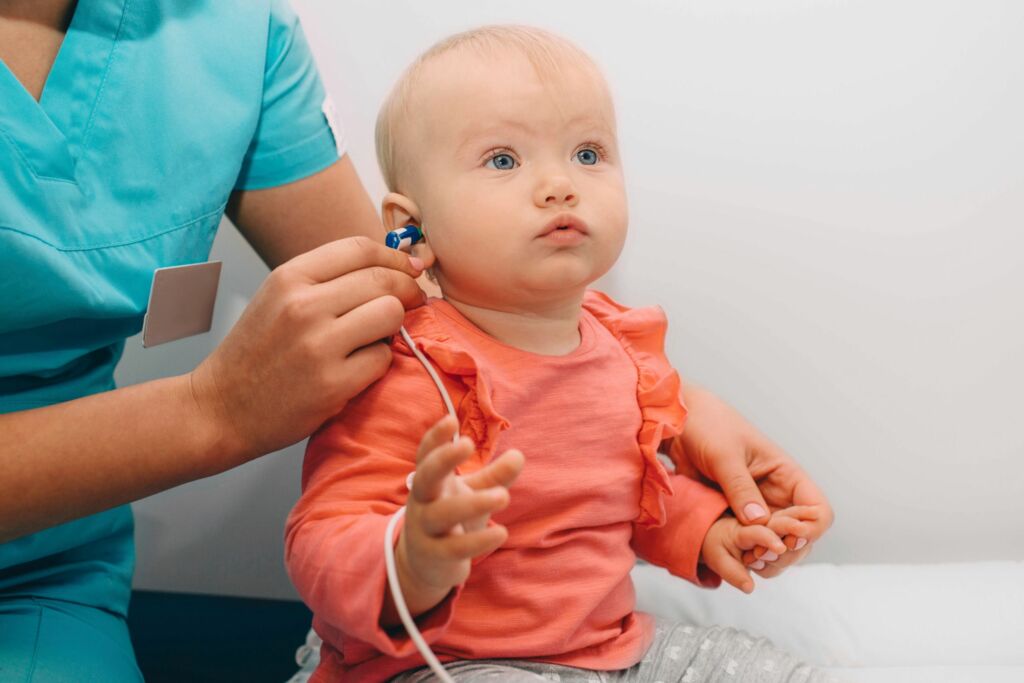
Audiologists have tools that a pediatrician’s otoscope does not. Tympanometry measures how the eardrum moves and detects fluid that looks unremarkable on visual exam. An audiogram establishes what a child actually hears across frequencies. Treating a speech delay without that information means guessing at the cause.
The Part That Surprises Families Most
Many parents expect that clearing the ears resolves the speech. Sometimes it does. Often it does not, and the reason is straightforward once stated.
Hearing determines what a child takes in. It does not automatically undo what a child has already learned. A four-year-old who spent two years hearing muffled endings has built a working system without them. That system persists after the fluid clears, because it is now habit rather than perception. The ears are fixed and the speech patterns are not.
Those patterns respond well to direct instruction. A Fort Myers speech therapist can teach the sounds and word endings a child missed, which is faster and more reliable than waiting to see whether they emerge on their own.
FOCUS Therapy offers Speech Therapy in Fort Myers, Florida. Call (239) 313.5049 or Contact Us online.
More Blog Entries:
Comments are closed.