
Blog
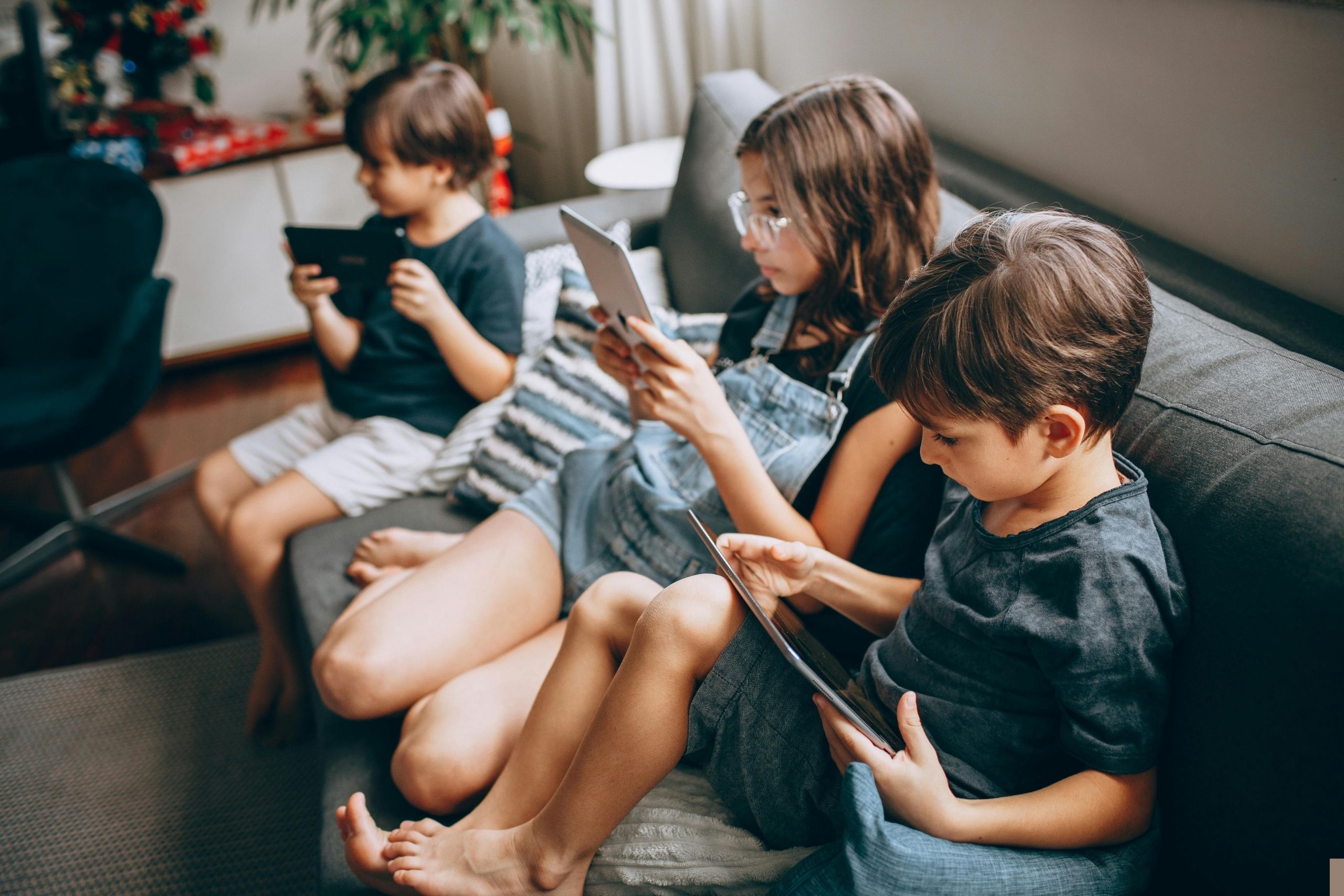
The Age of Toys Is Not Over: What Toy Story 5 Gets Right About Screens and Child Development
Pixar spent four films asking what happens to a toy when a child outgrows it. Toy Story 5 asks a harder question: What happens to a child when nothing gets outgrown, because nothing gets played with?
Bonnie is 8 now. She still plays with Jessie and Bullseye, but she cannot seem to make friends with the other kids in the neighborhood, because no one plays with toys anymore.
A discarded toy delivers the film’s thesis in five words: “The age of toys is over!”
Jessie climbs onto a roof and sees screens glowing in every house on the block. Bonnie’s parents buy her the frog-shaped tablet, Lilypad, with the hope that it help her socialize more with kids her own age.
Our Fort Myers ABA therapists recognize that the movie’s point is not that screens are all bad. It is that “toys are for play, but tech is for everything.” What Bonnie needed was another kid in the room. No device could be one. Screens do not harm children by doing something to them. The harm is in the hours of social-emotional development they are losing as a result. The impacts can be even more outsized for children with diagnoses like autism and ADHD who area already struggling with important life skills like interpersonal communication and impulse control.
What Kids Lose With Too Much Screen Time
The American Academy of Pediatrics focused not on the mechanism but the displacement in its February 2026 policy statement, Digital Ecosystems, Children, and Adolescents. High quality media built around children’s developmental needs can support learning and well-being. But media built to maximize engagement and commercialization encourages prolonged use — and that prolonged use displaces sleep, movement, and social development. The AAP states plainly that media and children “cannot be viewed solely through the lens of individual child behaviors or screen limits alone.”
The AAP’s current framework replaces the old clock-based rule with five questions, the 5 C’s: Child, Content, Calm, Crowding out, and Communication. Crowding out is the one that matters most here. What is the device getting in the way of?
For most children, the answer is sleep, movement, and other people – in that order.
Where screens genuinely help
The AAP treats live video chatting as an exception at any age, including infancy, because a person responding in real time is connection rather than passive watching. A grandparent on FaceTime is not screen time in any meaningful sense.
For children in speech therapy, the case is stronger. Augmentative and alternative communication systems run on tablets, and the common fear that a device will replace a child’s voice is not supported by evidence. A systematic review linked from ASHA’s Evidence Maps concludes that AAC does not hinder speech development at the earliest stages of language acquisition. A review of speech-generating device interventions found 87% of participants improved their vocal utterances, with no study reporting a decrease in spoken language. Across 27 studies of AAC intervention and speech production, none reported a decline.
A tablet that gives a child a way to request, refuse, and comment is delivering development, not competing with it.
Note that category is narrow.
Sleep goes first
Sleep is the first thing screens take, and is often one of the first things your child’s pediatric therapy team notices. A child who did not sleep cannot attend, cannot regulate, and cannot carry over what was practiced in session.
A JAMA Pediatrics systematic review and meta-analysis by Carter and colleagues pooled 20 studies covering 125,198 children. Bedtime media device use was associated with inadequate sleep quantity (OR 2.17), poor sleep quality (OR 1.46), and excessive daytime sleepiness (OR 2.72). Children who merely had access to a device at night, without using it, were still more likely to have inadequate sleep quantity (OR 1.79), poor sleep quality (OR 1.53), and excessive daytime sleepiness (OR 2.27).
A powered off tablet on the nightstand still costs a child sleep. Federal data from the 2024 National Survey of Children’s Health shows 65.3% of children ages 6 to 17 get adequate sleep on a weeknight. One in three does not.
Toy Story 5 shows how this happens by accident. Bonnie’s parents announce strict screen rules and never enforce them. Lilypad’s own screentime limit cannot be set lower than one hour. The rule existed. The follow-through did not.
Tapping is not the same as building
Tapping and swiping are motor actions. They are repetitive ones, and they crowd out the varied hand work that builds grip strength, in-hand manipulation, and eventually handwriting. Coloring, beading, cutting, and stacking are not filler activities. They are the input.
One recent longitudinal study tested 141 preschool children twice, one year apart. Greater media usage predicted worse fine motor skills, the relationship ran in one direction rather than both, and it was stronger for newer media than for television. Their earlier two-year study of 117 preschoolers found media usage associated with worse haptic and fine motor skills.
The evidence on fine motor is not unanimous. One study of toddlers aged 19 to 36 months found that earlier active touchscreen scrolling was associated with earlier fine motor achievement on a block stacking task.
Gross motor is less ambiguous. The CDC recommends 60 minutes or more of moderate-to-vigorous physical activity daily for children ages 6 to 17. In 2024, 19.2% of American children in that age range hit it every day.
CDC surveillance data from July 2021 through December 2023 found that among children and adolescents aged 12 to 17, daily physical activity fell as screen time rose, from 70.4% of those with two hours or less down to 54.4% of those with four hours or more.
Bottom line: A child on a tablet indoors is not running, jumping, kicking, or throwing.
Social skills are learned in person
Birthday parties, playdates, and recess are where children learn and get practice with reading a face, taking a turn, recovering from being left out, and repairing a friendship. Those hours have no substitute.

A field experiment by researchers at UCLA tested this directly. Fifty-one preteens spent five days at an overnight nature camp with no television, computers, or mobile phones. They were compared against 54 matched controls who kept their usual media habits. Both groups took pre-tests and post-tests inferring emotional states from facial expressions and from videotaped scenes with speech removed. After five days of face-to-face interaction, the camp group’s recognition of nonverbal emotion cues improved significantly more than the control group’s on both measures.
Jonathan Haidt made the same case at book length in The Anxious Generation, arguing that childhood shifted from play-based to phone-based and naming four foundational harms: social deprivation, sleep deprivation, attention fragmentation, and addiction.
In Toy Story 5, the tablet connects Bonnie to a group chat, and the group chat produces cyberbullying. Bonnie and another girl both end up in tears when screens get in the way of their attempts to make friends.
The earlier the exposure, the higher the cost
The impacts of excess screentime can be exacerbated the earlier it starts.
A Japanese cohort study published in JAMA Pediatrics followed 7,097 mother-child pairs and found a dose-response association between screen time at age 1 and developmental delays in communication and problem-solving at ages 2 and 4. Delays in fine motor and personal social skills appeared at age 2.
A Yale developmental psychologist gave the clearest read of that result: it may not be the screens themselves, but what they replace. Face-to-face interaction gives babies information about language and meaning through facial expressions, words, tone of voice, and physical feedback, and none of that happens while a child watches a screen.
This is why play is not the thing children do until real development starts. The AAP’s clinical report The Power of Play, reaffirmed in January 2025, found that developmentally appropriate play with parents and peers builds social-emotional, cognitive, language, and self-regulation skills. Play is not frivolous. It enhances brain structure and function and promotes executive function.
What parents can change this week
Get devices out of the bedroom, powered off included. Carter’s data says access alone costs sleep. This is the highest-yield change most families can make.
Protect the hour before bed. No screens in it, for anyone in the house.
Watch with your child and talk about it. The AAP recommends choosing high-quality programming and co-viewing it so children can connect what they see to the world around them. Narrating what is happening on screen turns passive watching into language input.
Name what is missing. Do not start with a minutes target. Ask what your child’s use of a device displaced this week. Sleep, outside time, or dinner conversation. Make more time for that thing.
Watch your own phone. Children calibrate to what adults do, not to what adults announce.
When to ask for an evaluation
Cutting screen time does not treat a developmental delay. If a child is behind on language, struggling with pencil grip or self-feeding, melting down in ways that do not fit their age, or pulling away from peers, that warrants an evaluation regardless of what the tablet usage looks like. Screen habits are one variable a clinician weighs among many.
FOCUS Florida evaluates children across communication, motor, sensory, and behavioral development. Bring concerns early, as early intervention often has the greatest impact.
Back to Toy Story 5: Lilypad does ultimately help Bonnie with her goal in finding a friend. What Lilypad cannot do is be one.
A device can help teach a word, cue a request, or carry a grandparent’s voice across three states. It cannot give a child the thing that actually builds a brain, which is another person paying attention, in the same room, at the same time. Every hour a screen holds is an hour that input does not arrive. The age of toys is not over. But it may need more parental screen time restrictions and preserve it.
FOCUS Therapy offers ABA Therapy in Fort Myers, Florida. Call (239) 313.5049 or Contact Us online.
Additional Resources:
Choi, K. R., et al. (2022). “Patient Outcomes After Applied Behavior Analysis for Autism Spectrum Disorder.” Journal of Developmental & Behavioral Pediatrics. Read the open-access study on PubMed Central.
More Blog Entries:
Comments are closed.